







In short
GPS is everywhere, from smartphones to tractors, but it’s not always accurate enough. When every centimeter counts, Real-Time Kinematic (RTK) technology steps in. On this page, we explain the key differences between standard GPS and RTK, so you know exactly when and why to choose one over the other.
What is standard GPS?
GPS calculates position using satellites, but signal errors and delays can cause deviations up to several meters. Standard GPS (Global Positioning System) works by receiving signals from multiple satellites. These signals travel through the atmosphere, which introduces delays and interference. In most everyday applications, like car navigation, this deviation isn’t a problem. But for technical fields where accuracy matters, even a few meters can be too much.
What makes RTK more accurate?
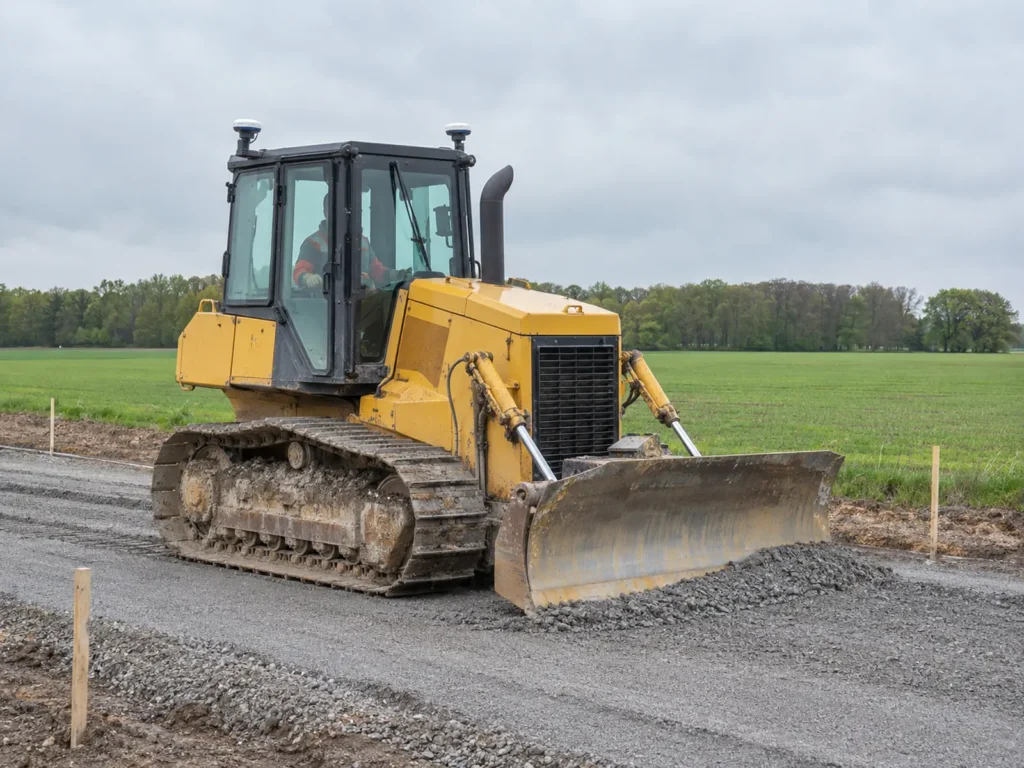
RTK corrects GPS signals in real time using a nearby base station, reducing errors to a few centimeters. RTK enhances standard GPS by using correction data from a fixed reference station. This allows the system to eliminate most signal distortion caused by atmospheric conditions. The result: typically 1 to 2 cm accuracy under good conditions. RTK is ideal for sectors like surveying, precision agriculture, drone navigation, and construction.
Key differences at a glance
From accuracy to use cases, here’s how RTK and GPS compare in practice.
| Feature | Standard GPS | RTK Technology |
| Accuracy | 3 to 10 meters | Typically 1 to 2 centimeters |
| Real-time corrections | No | Yes |
| Suitable for | Navigation, general location | Surveying, agriculture, automation |
| Hardware needed | GPS receiver | RTK-capable GNSS receiver + correction service (NTRIP) |
| Signal delay handling | Uncorrected | Corrected in real time |
When should you choose RTK?
Use RTK when high-precision positioning is essential to your workflow or technical setup.
RTK is the better choice when centimeter accuracy impacts your results. Think of applications like machine control, autonomous navigation, detailed mapping, or alignment tasks in infrastructure. If your work requires accurate, repeatable positioning, RTK isn’t a luxury, it’s a necessity.
4.8/5
5/5
based on 26+ reviews
Test RTKsub with your own equipment
